
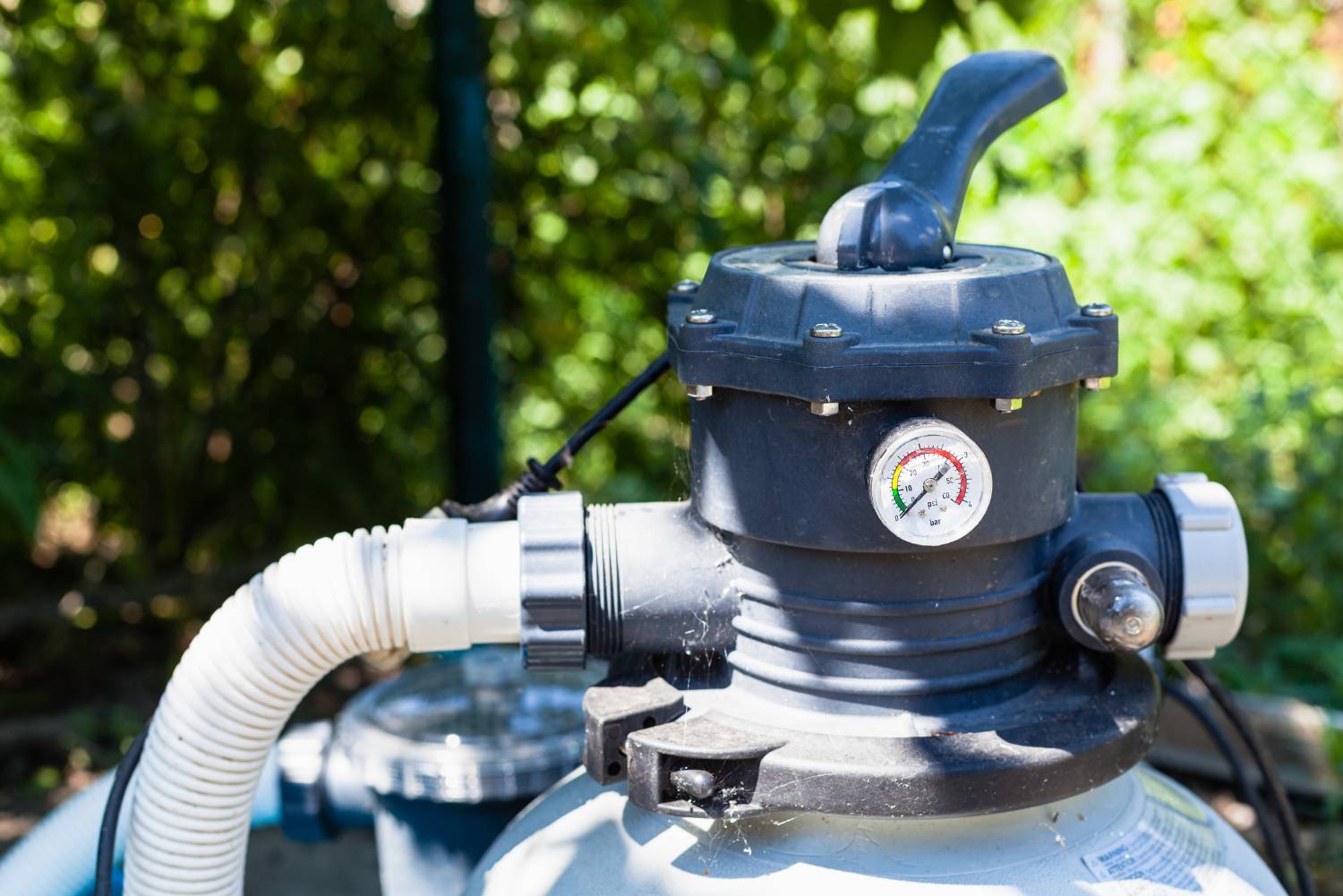
When a pool pump loses prime, the entire circulation system stops.
Water stops moving, filtration shuts down and the pool can turn cloudy far faster than most owners expect. The issue is common year-round, but it happens far more frequently in summer. Higher temperatures, heavier usage and changes in water level all play a role, and the causes are often less obvious than a simple air leak or blockage.
Understanding why pumps lose prime during Melbourne’s warmest months begins with how temperature, demand and system pressure interact below the surface.
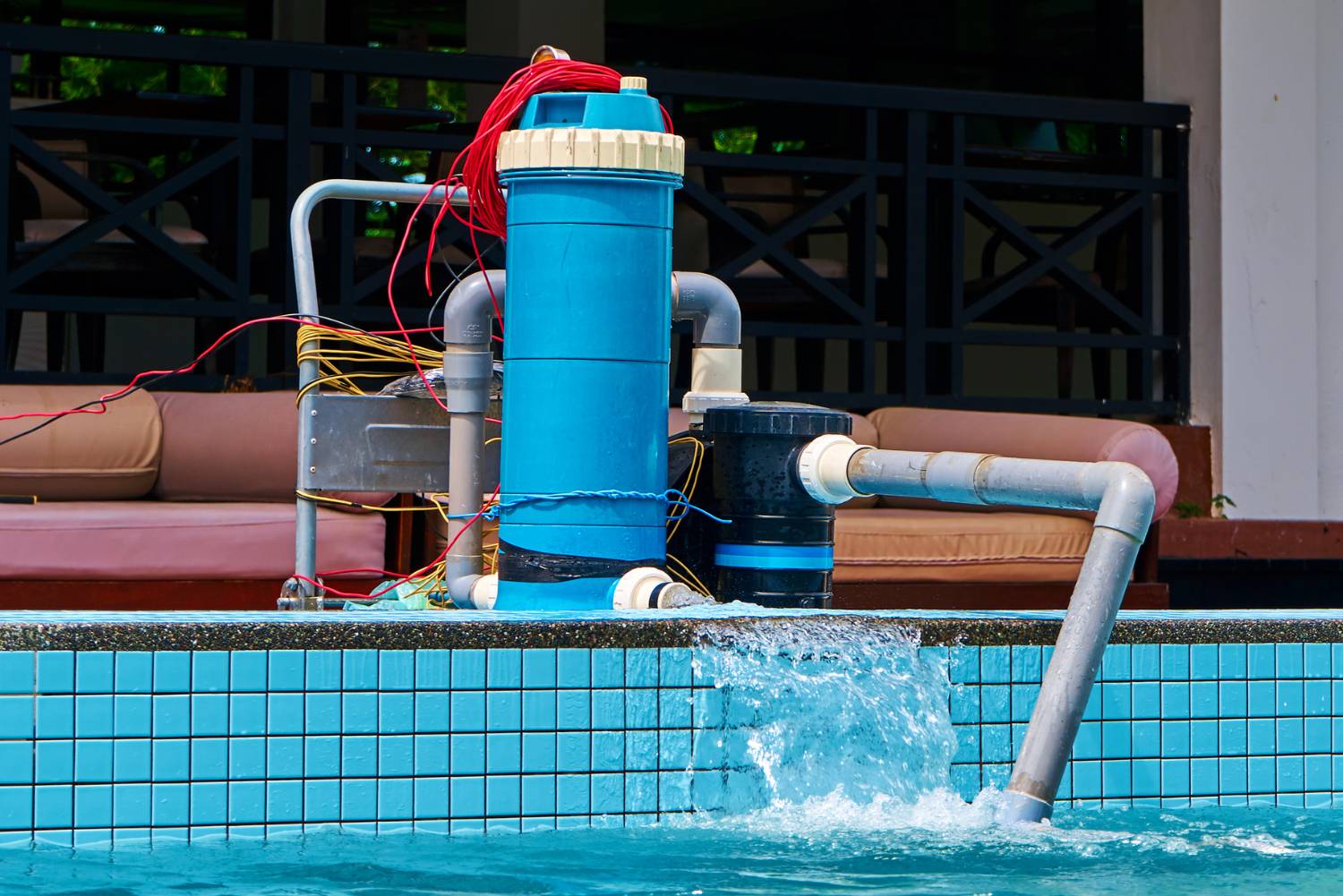
Evaporation Drops the Water Level Faster Than Owners Realise
In summer, evaporation increases sharply. Even well-maintained pools can lose several millimetres a day during hot, windy periods. When water levels fall below the midpoint of the skimmer opening, air enters the system. This is one of the most common reasons pumps lose prime in January and February.
Signs the water level is too low include:
Because evaporation happens gradually, owners often don’t notice the change until the pump stops pulling water entirely.
Heat Thins the Water and Increases System Strain
Warmer water moves more easily through plumbing, but this can have unintended effects. In hot conditions, pumps can pull water faster than the skimmer can supply it, especially when baskets are partially blocked. As air pockets form, the pump loses prime and begins to run dry.
Melbourne summers also raise equipment-pad temperatures. Pumps left in direct sun can overheat, causing seals to expand or contract. This movement allows small amounts of air to enter the system, weakening prime over time.
Melbourne summers also raise equipment-pad temperatures. Pumps left in direct sun can overheat, causing seals to expand or contract. This movement allows small amounts of air to enter the system, weakening prime over time.
Blocked Baskets Become a Bigger Problem in Summer
Summer means heavier use, sunscreen build-up, lawn clippings and leaves falling from heat-stressed trees. Even small amounts of debris reduce water flow into the pump. When skimmers or pump baskets fill faster than usual, flow becomes restricted and air enters the system.
Regular cleaning prevents most of these issues, but during summer, baskets may need checking every day or two rather than weekly.
Regular cleaning prevents most of these issues, but during summer, baskets may need checking every day or two rather than weekly.
Underground Leaks Make Priming Impossible
Air can enter through underground suction leaks, particularly in older pools with ageing PVC or shifting soil. These leaks rarely show at ground level. Instead, they allow small amounts of air to enter the suction line. Heat expands trapped air, making priming more difficult in summer than in winter.
Underground suction leaks often present with:
If the pump regains prime in the morning but struggles in afternoon heat, a suction-side leak is likely.
Why Solar Heating Can Contribute
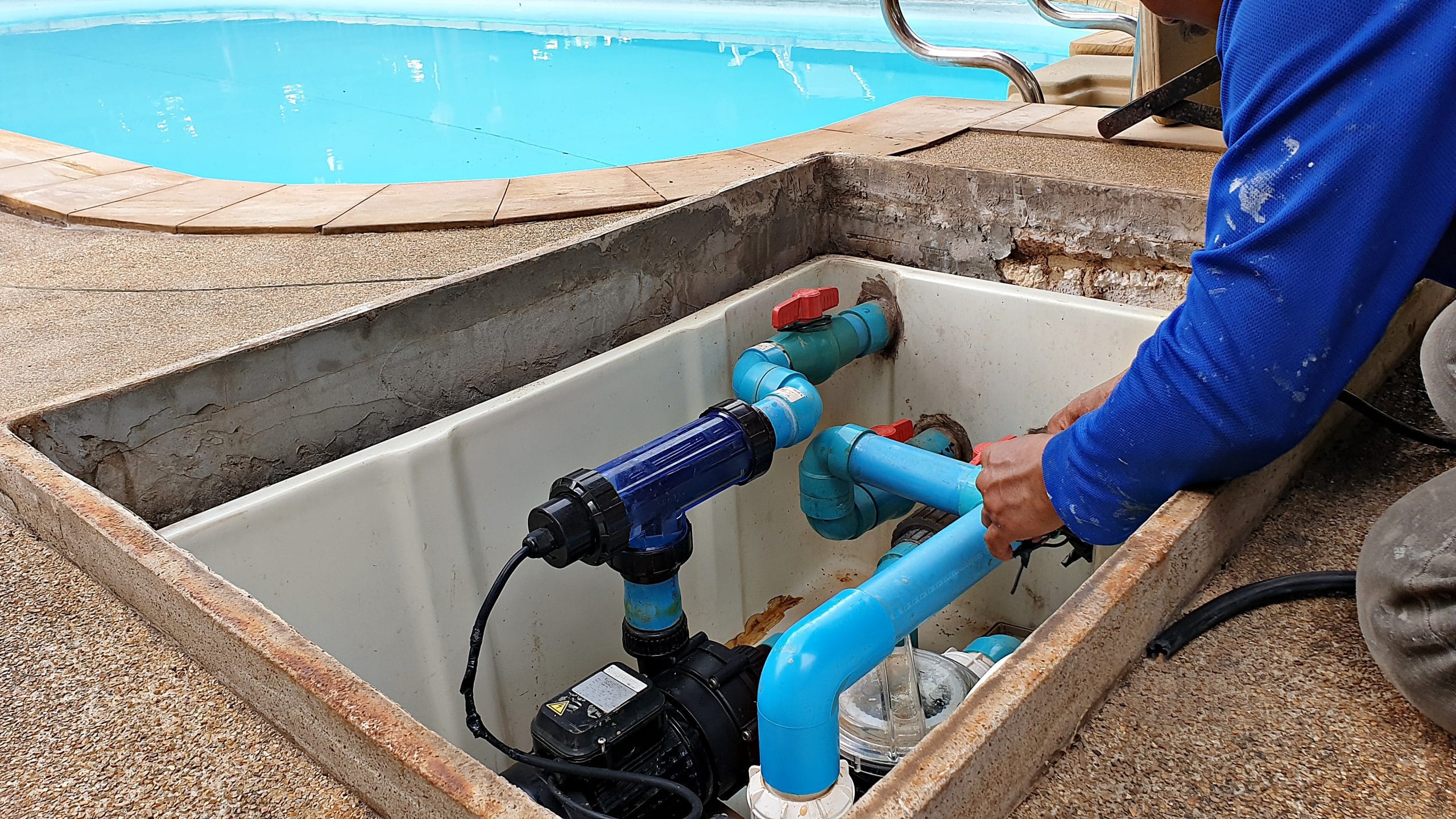
Solar systems increase the height the pump must push water. When the roof is hot, the internal air in the solar mats expands. If valves or roof lines hold air at the start of a cycle, the pump may lose prime shortly after switching to solar mode.
Pools with solar systems often lose prime for reasons unrelated to filtration or water chemistry.
Pools with solar systems often lose prime for reasons unrelated to filtration or water chemistry.
Equipment Leaks Are Easier to Miss Than Structural Ones
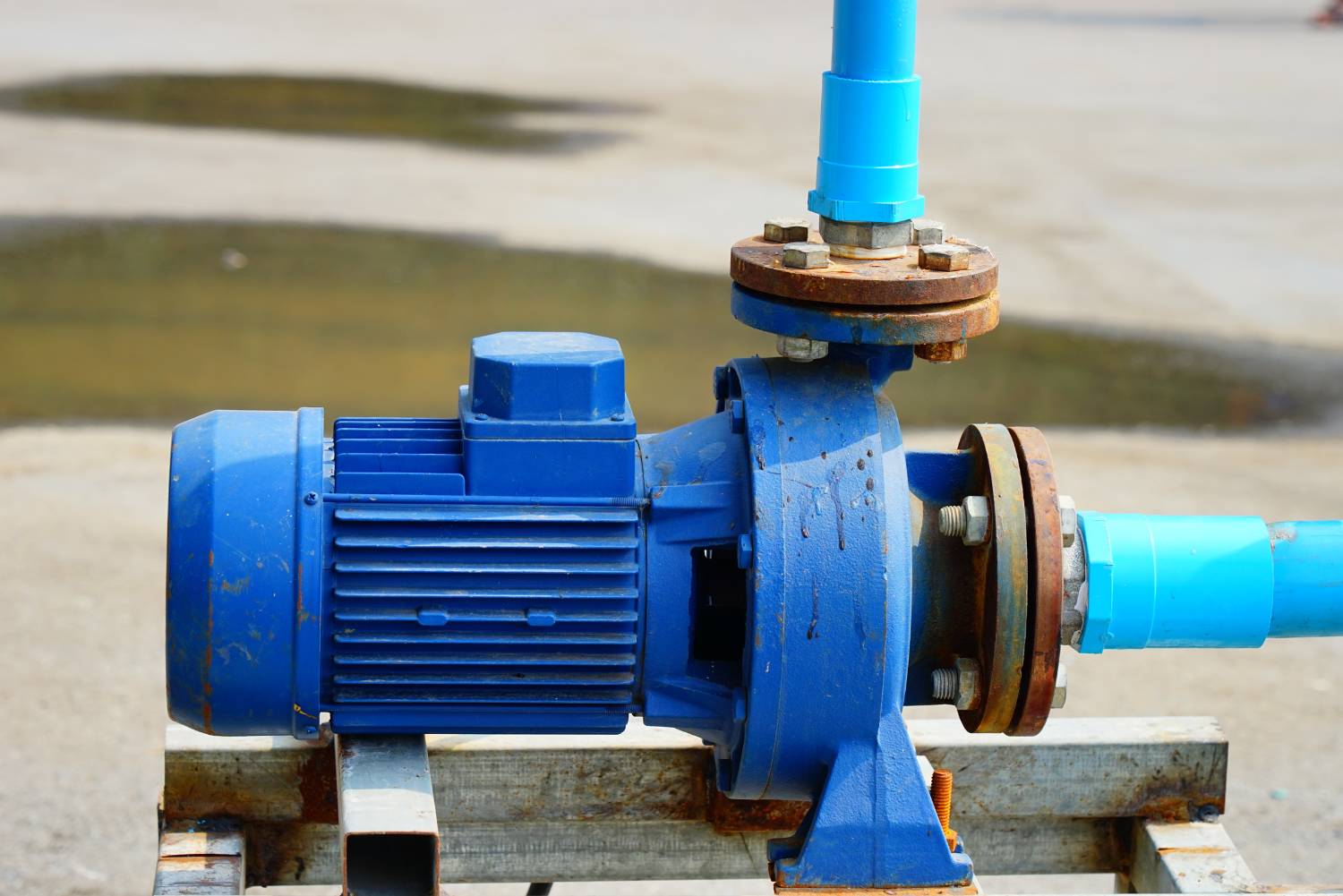
Leaks around valves, unions, lids and pump fittings allow air to enter the system without leaving visible water trails. These leaks worsen in summer because plastic components expand and contract throughout the day.
Common equipment-side entry points include:
These leaks often only appear when the pump is running, making them difficult to detect by sight alone.
Why Summer Worsens Priming Problems
The table below summarises the seasonal factors that increase priming issues.
| Summer Factor | How It Contributes to Loss of Prime |
|---|---|
| Higher evaporation | Water drops below the skimmer faster |
| Warmer water | Pump pulls water faster than skimmer can supply |
| Increased debris | Baskets block more quickly, reducing flow |
| Hot equipment pads | Seals expand and air enters the system |
| Solar heating demand | More lift required, more air in lines |
Practical Checks Before Calling a Technician
Most priming problems start small. Addressing them early prevents damage to the pump and protects water quality.
Useful steps for owners include:
keeping water halfway up the skimmer mouth
cleaning skimmer and pump baskets more often in summer
checking pump lid O-rings for cracks or poor lubrication
inspecting unions and fittings while the pump is running
ensuring solar valves are purging air correctly
checking for air bubbles returning through jets
If the pump continues to lose prime after these checks, pressure testing or line inspection by a specialist technician like one of our team at Dolphin Pools may be required. This is particularly true in older pools.
Why Priming Matters More in Summer
A primed pump keeps water moving through filters, chlorinators and sanitising systems. Without circulation, chlorine levels drop, algae takes hold and the pool can turn cloudy in hours. Heat accelerates every part of this process.
This is why pumps that struggle in winter often fail outright during summer. The increased load exposes issues that have been building quietly for months.
A pump that loses prime frequently is not just an inconvenience. It is usually a sign that something in the system needs attention before summer reaches full strength.
This is why pumps that struggle in winter often fail outright during summer. The increased load exposes issues that have been building quietly for months.
A pump that loses prime frequently is not just an inconvenience. It is usually a sign that something in the system needs attention before summer reaches full strength.