
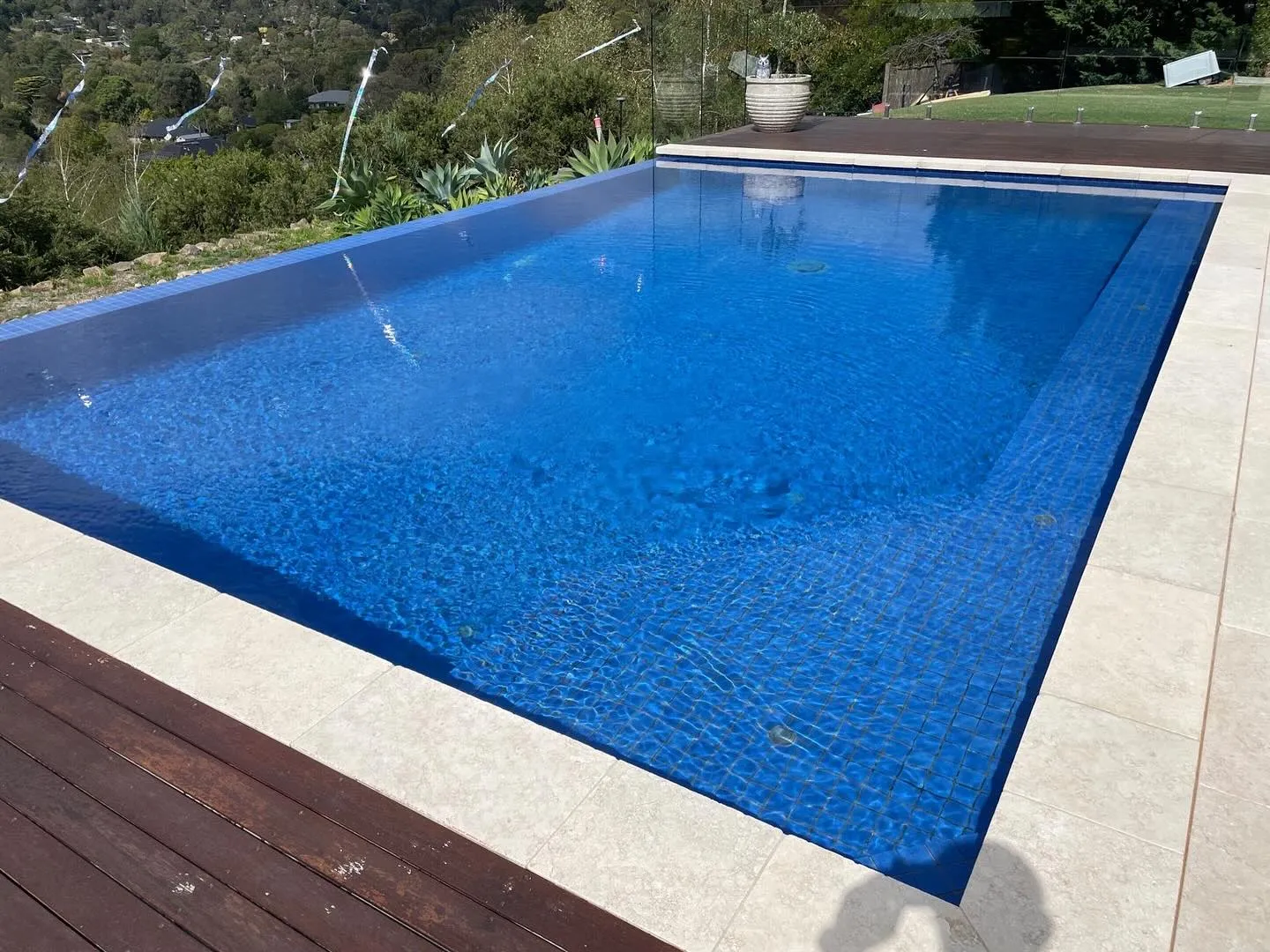
Many swimming pools built in the 1990s and early 2000s were designed for a different backyard environment.
Landscaping styles were simpler, surrounding tree canopies were smaller and expectations around water clarity were less exacting than they are today.
As those pools age, owners often notice that cleaning feels harder than it once did. Debris seems to return more quickly, circulation feels less effective and water clarity becomes harder to maintain. These issues are rarely the result of a single fault. They reflect a mismatch between older pool design assumptions and modern conditions.
Leaf load has increased in many backyards
One of the most significant changes affecting older pools is the amount of organic debris entering the water. Trees planted decades ago are now fully mature, shedding more leaves, pollen and fine organic matter than they did when the pool was first installed.
Modern landscaping also favours dense planting and garden beds closer to pool edges. While visually appealing, this increases the volume of debris that ends up in the water, particularly during windy conditions.
Older pool designs were not typically built with this level of debris load in mind.
Modern landscaping also favours dense planting and garden beds closer to pool edges. While visually appealing, this increases the volume of debris that ends up in the water, particularly during windy conditions.
Older pool designs were not typically built with this level of debris load in mind.
Fine debris behaves differently in water
Not all debris is visible. Fine particles such as dust, pollen and small leaf fragments remain suspended in the water longer and are harder to capture through traditional skimming alone.
Older pools often rely on circulation patterns that prioritise surface skimming rather than floor level movement. As a result, fine debris settles in areas with weaker circulation, building up gradually even when the pool appears clean at a glance.
This can lead to ongoing cleaning issues that are difficult to resolve through manual skimming alone.
Older pools often rely on circulation patterns that prioritise surface skimming rather than floor level movement. As a result, fine debris settles in areas with weaker circulation, building up gradually even when the pool appears clean at a glance.
This can lead to ongoing cleaning issues that are difficult to resolve through manual skimming alone.
Circulation patterns reflect older design priorities
Pool circulation has evolved over time. Earlier designs often focused on basic turnover rather than optimised flow. Return jets and skimmer placement were not always configured to address complex debris movement.
As pools age, these circulation limitations become more apparent, particularly when combined with heavier debris loads. Areas of low flow become collection points for sediment, leaves and fine material.
Improving circulation is often central to resolving persistent cleaning issues.
As pools age, these circulation limitations become more apparent, particularly when combined with heavier debris loads. Areas of low flow become collection points for sediment, leaves and fine material.
Improving circulation is often central to resolving persistent cleaning issues.
Manual cleaning was assumed to be frequent
When many older pools were designed, regular manual vacuuming was an expected part of ownership. Cleaning routines assumed a level of hands on attention that fewer owners have time for today.
Modern pool ownership places greater emphasis on consistency rather than effort. When manual cleaning becomes irregular, design limitations become more visible, and debris accumulates faster than it can be removed.
Modern pool ownership places greater emphasis on consistency rather than effort. When manual cleaning becomes irregular, design limitations become more visible, and debris accumulates faster than it can be removed.

How cleaning expectations have changed
Expectations around water clarity have shifted. Pools are now expected to look clean at all times, not just after scheduled maintenance. This places additional pressure on systems that were designed for a different usage pattern.
The gap between expectation and design capability is where many cleaning frustrations emerge.
The gap between expectation and design capability is where many cleaning frustrations emerge.
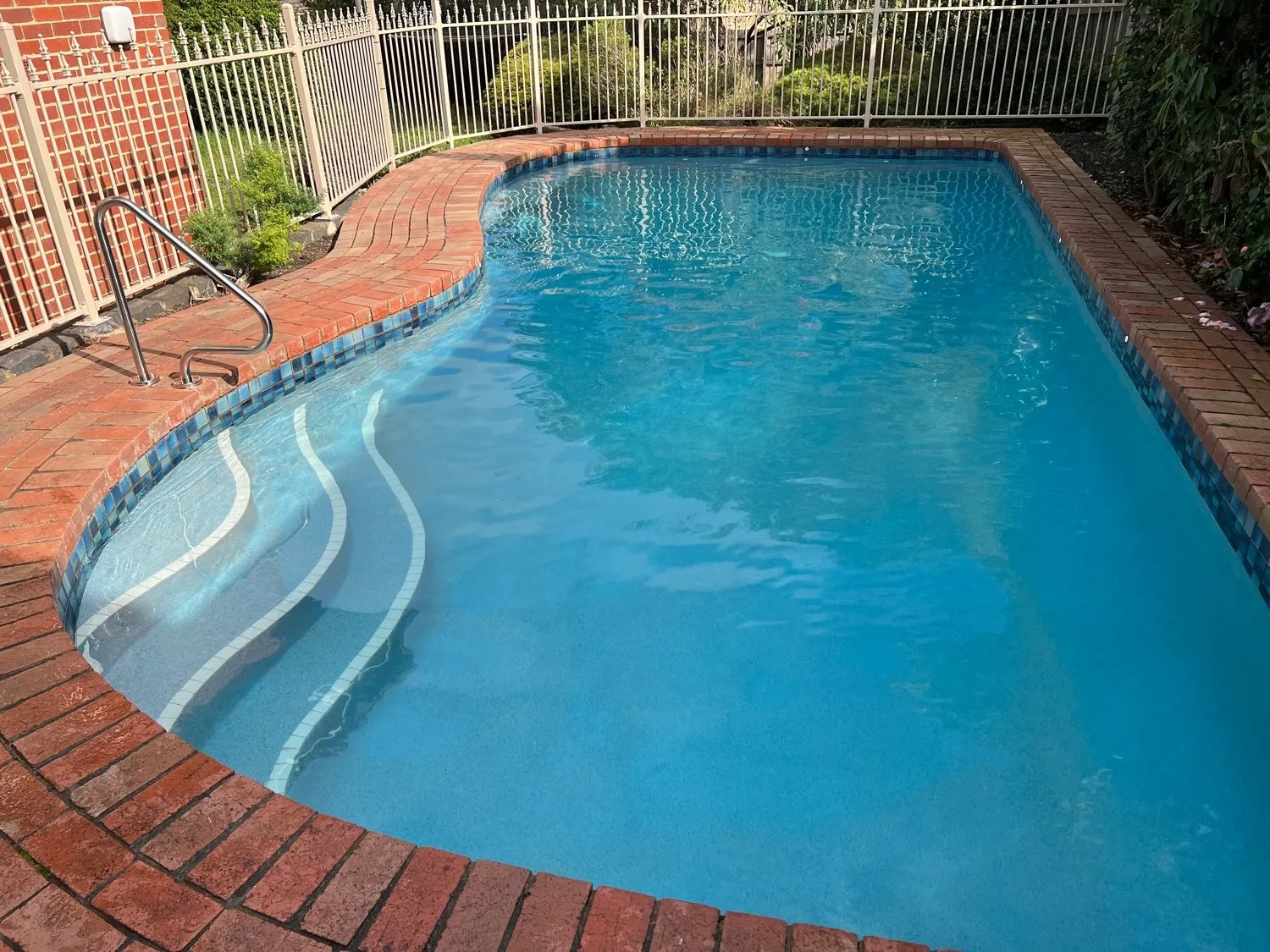
Why these issues appear gradually
These challenges do not usually appear suddenly. They build over time as trees mature, landscapes change and circulation efficiency declines with ageing equipment.
Because the pool structure remains the same, it can be difficult to identify why cleaning has become more demanding without reviewing how conditions around the pool have evolved.
Because the pool structure remains the same, it can be difficult to identify why cleaning has become more demanding without reviewing how conditions around the pool have evolved.
Adapting older pools to modern conditions
Addressing modern debris challenges often involves improving how debris is managed rather than changing the pool itself. Enhancements to circulation, filtration and debris removal can help older pools cope more effectively with current conditions.
Automated cleaning tools are often introduced at this stage to support consistent debris removal, particularly for fine material that manual methods struggle to capture regularly.
The goal is not to replace professional servicing or system assessment, but to support them in an environment that has changed since the pool was first built.
Automated cleaning tools are often introduced at this stage to support consistent debris removal, particularly for fine material that manual methods struggle to capture regularly.
The goal is not to replace professional servicing or system assessment, but to support them in an environment that has changed since the pool was first built.
Frequently Asked Questions
Mature trees, denser landscaping and fine debris contribute to higher debris loads than many older pools were designed to handle.
Yes. Areas with weaker circulation allow debris to settle and accumulate, even when surface water looks clear.
Not necessarily. They were designed for the conditions and expectations of their time, which have since changed.
In many cases, circulation can be improved through system assessment and targeted upgrades rather than structural changes.
Fine particles remain suspended longer and are harder to capture without consistent removal and effective circulation.
They can support regular debris removal, particularly for fine material, but they work best alongside properly functioning circulation and filtration systems.